Can You Use an Ultrasonic Cleaner on Jade? Check the Whole Pendant
本文目录
Do not put a jade pendant in an ultrasonic cleaner simply because the stone is called natural or Type A. First establish the material, treatments, attachments and current condition, then obtain cleaning instructions for that complete piece. If any of those points is unresolved, leave the pendant out of the machine.
This is a guide to making that decision for a pendant you own or are considering. It explains why advice about an untreated stone does not automatically apply to a finished necklace, and gives you a record to take to a jeweler. It is not a home test for identifying jade or certifying cleaning safety.
Why the advice can sound contradictory
GIA’s Jade Care and Cleaning Guide says ultrasonic and steam cleaning are suitable for untreated jade, then recommends warm, soapy water because jade may have been treated. That is conditional material guidance. It does not establish the treatment status or condition of a pendant in your hand.
GIA’s guide to gems and ultrasonic cleaners separately warns about filled fractures, some coatings and jewelry with insecure settings. Its advice when durability is uncertain is to avoid the machine and seek a jeweler’s help. Both points matter: a suitable stone is only part of the decision.
The whole-pendant rule
Cleaning suitability belongs to the complete piece: the stone, treatments, attachments, condition and proposed method. One favorable label does not clear the other parts. This is our editorial decision rule, drawn from the distinctions above, rather than a laboratory test or a new gemological grade.
1. Record the actual material
Copy the material description and the source of that description. Jadeite, nephrite and serpentine are not interchangeable names. GIA’s jade care page discusses jadeite and nephrite; it is not a care specification for every stone sold using the word jade. Our Xiuyan jade and jadeite material checklist explains that distinction. If identification is unresolved, stop this checklist before choosing a cleaning method.
2. Separate treatment from the trade label
Read the actual treatment statement and any item-specific report. GIA’s jade buyer’s guide includes natural material and wax-polished material in its explanation of A jade. Therefore, the letter A should not be turned into a blanket approval for machine cleaning. Record the treatment findings and separately ask about any surface finish or coating. If the description is silent, write unknown rather than untreated.
3. Inventory everything that would enter the bath
List the cord or chain, beads, clasp, bail and any setting. Ask what those components are made from and whether their finishes, joins or attachments impose cleaning restrictions. Do not guess from a gold-colored surface or a photograph. Removing an easily detachable chain does not establish that the remaining pendant is suitable; do not dismantle a setting to complete this exercise.
4. Check whether the condition has changed
Tell the jeweler about a recent knock, a moving stone, a bent fitting or a newly noticed line. Do not tap, scratch or flex the pendant as a test. GIA’s jewelry care advice notes that ultrasonic vibration can loosen stones or cause damage where stones touch. A clean-looking surface does not answer a question about secure assembly.
5. Ask for instructions for this piece
A useful recommendation should cover the current stone and every component that will remain attached, its present condition, and the proposed machine and cleaning solution. Record who assessed it and when. Follow any existing piece-specific restriction; a generic statement is not an exception to it. Ask a qualified jeweler for an assessment, and revisit the advice if the piece or its attachments change.
Two listing examples: what they do and do not establish
JADE ALL DAY sells the examples in this section. Their listing statements were checked on 28 October 2026; no report, setting or stone was physically examined for this article.
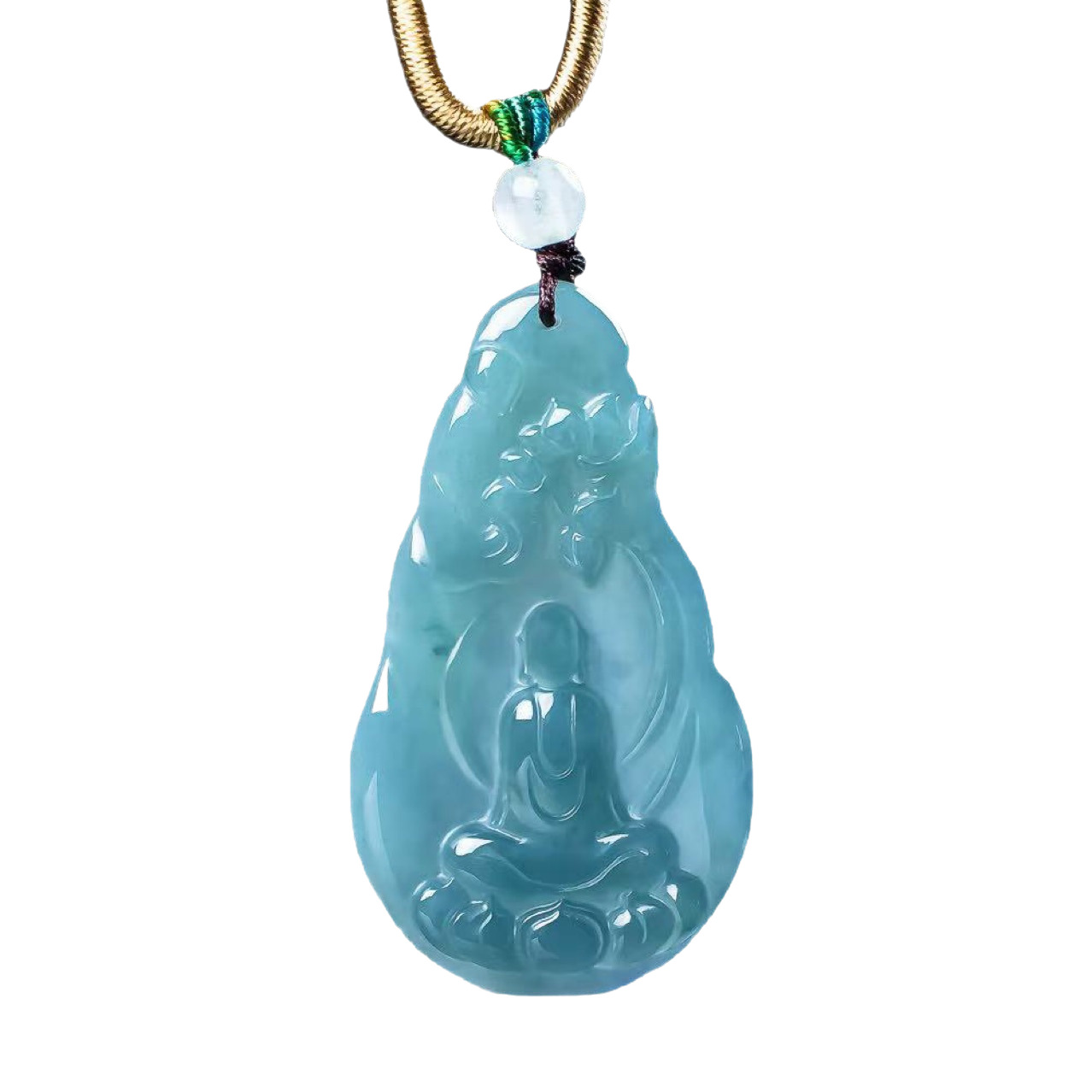
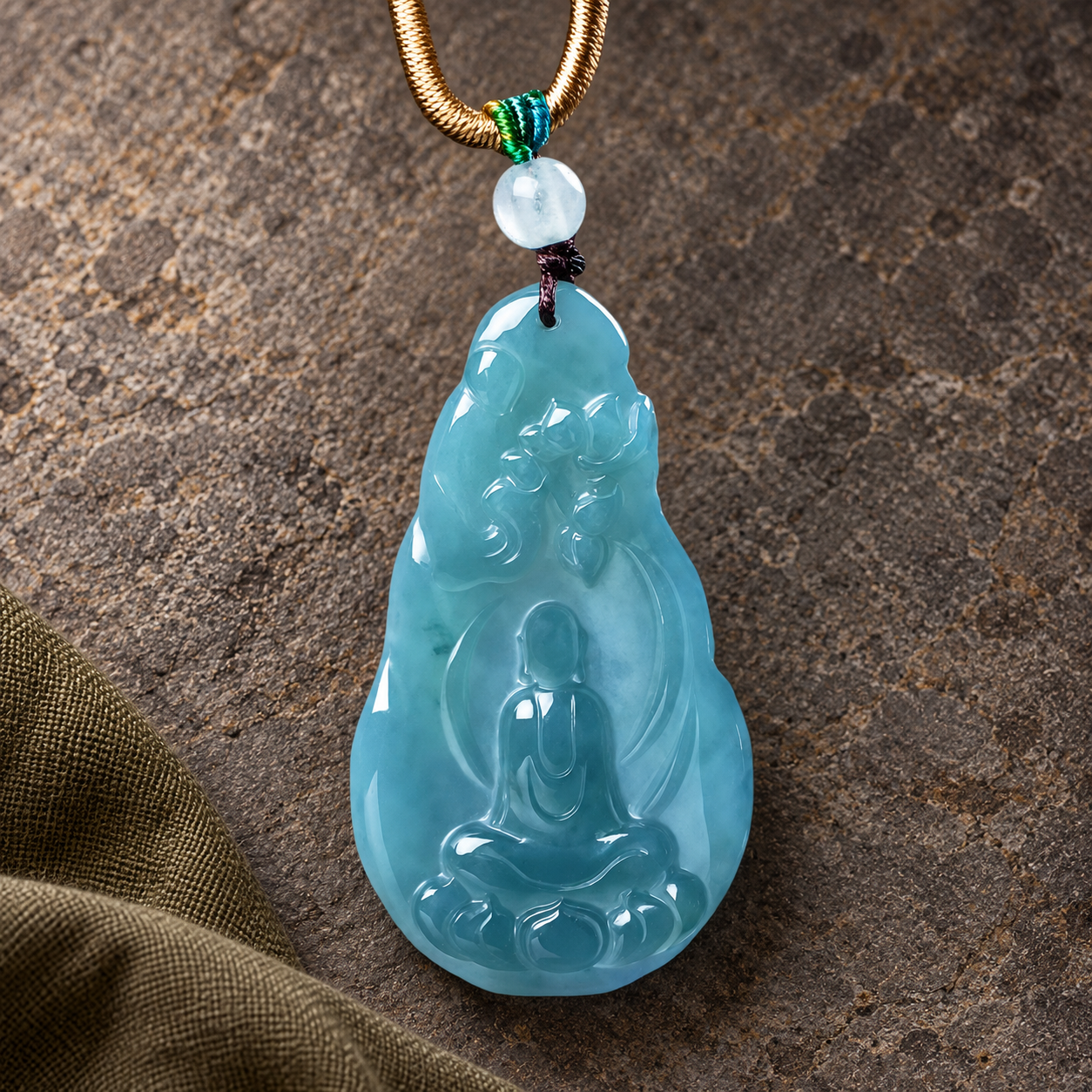
Our Blue Water Seated Buddha pendant No. 7330 is listed as natural jadeite, with a physical identification certificate offered as an optional add-on. The title’s Grade A description and the optional document do not establish that the assembled item has been assessed for an ultrasonic bath. For a piece you own, use its actual documentation and current attachments.
Our Hatsune Miku Full Body Design 3A46 is disclosed as serpentine, traditionally called Xiuyan jade. The untreated-jadeite statement above cannot be transferred to it. Ask for care advice appropriate to its disclosed material and assembly; this article supplies no serpentine immersion or machine-cleaning recipe.
A cleaning decision card you can copy
Keep the record with your item photographs or purchase documents. Separate a seller’s description from a report and from a professional’s cleaning recommendation.
Piece number or identifying photographs:
Material and evidence source:
Treatment statement and evidence source:
Cord, chain, beads, bail and setting:
Known finishes, coatings or joins:
Recent knock, movement or other change:
Unanswered questions:
Jeweler and date of assessment:
Machine, solution and method covered:
Parts that must remain out of the bath:
Piece-specific restrictions:
Decision and date:
An unknown stays unknown. If you cannot identify a component or resolve a condition concern, the card has done its job by showing why you should not proceed. Filling every line is not a certificate or permission to use any machine.
What to do while questions remain
For identified jadeite, GIA’s jade buyer’s guide offers a soft cloth or warm, soapy water; wet cleaning still needs to suit the attachments and finish. Our current jade care instructions take a conservative approach for jadeite set in S925 silver and advise avoiding ultrasonic and steam cleaners. The general untreated-jade statement does not override those instructions. This is not a soaking recipe for an unidentified stone, cord or finish.
If a fitting has moved, a stone is loose or damage is suspected, stop wearing the piece until it has been assessed. A photograph alone cannot settle the condition of a mounting. Contact the seller for missing construction information, or a local jeweler for an examination. Our contact page is available for questions about our listings; this is not an offer of repair or cleaning services. You do not need to buy a cleaner or another pendant to resolve an evidence gap.
Sources and scope
Sources and listing details were checked on 28 October 2026. GIA’s linked educational pages support the material, treatment and machine-cleaning cautions beside them. The five checks and decision card are JADE ALL DAY’s editorial organization of those questions, not a GIA-approved protocol. The photograph is an existing supplier image, not evidence of treatment status or cleaning performance. No ultrasonic trial, physical inspection or laboratory verification was performed for this article.
延伸阅读
继续阅读更多手记